Provisional tax is a system that allows certain taxpayers to pay their income tax in advance, instead of settling a large amount at the end of the tax year. It is not a separate tax, but rather a method of paying your normal income tax in instalments based on estimated earnings.
This system mainly applies to people who earn income that is not subject to PAYE, such as freelancers, business owners, consultants, and those earning rental or investment income. By paying tax in portions during the year, you reduce the risk of a large tax bill and possible penalties later on.
In simple terms, provisional tax helps you stay up to date with your tax obligations while spreading payments more evenly.
How Often Do I Pay Provisional Tax?
Provisional tax is typically paid twice a year, with an optional third payment if needed. The payments are based on estimated taxable income for the year.
Here is a basic timeline:
- First payment: Due halfway through the tax year. This is usually at the end of August. You estimate your income for the full year and pay a portion of the expected tax.
- Second payment: Due at the end of the tax year, usually at the end of February. At this stage, your estimate should be more accurate, and you pay the remaining balance based on your updated income.
- Third payment (optional): This can be made after the end of the tax year, typically by the end of September. It is used to settle any shortfall and avoid interest charges.
It is important to ensure your estimates are as accurate as possible. Underestimating your income can lead to penalties and interest, while overestimating may affect your cash flow unnecessarily.
How Does Provisional Tax Differ From PAYE?
PAYE, or Pay As You Earn, is a system where tax is deducted automatically from your salary by your employer. If you are employed full time and only earn a salary, your tax is usually handled through PAYE, and you may not need to worry about provisional tax.
Provisional tax, on the other hand, applies when income is not taxed at source. This includes:
- Self employment income
- Freelance or contract work
- Rental income
- Interest or investment income beyond certain thresholds
The key difference is control and responsibility. With PAYE, your employer calculates and pays your tax on your behalf. With provisional tax, you are responsible for estimating your income and making the payments yourself.
Because of this, provisional taxpayers need to be more organised and proactive in managing their finances and tax obligations.
Can I Pay Provisional Tax Myself or Do I Need an Accountant?
You can absolutely handle provisional tax yourself, especially if your financial situation is straightforward. Many taxpayers use online systems to submit returns and make payments.
However, there are a few things to consider:
If your income varies, involves multiple streams, or includes business expenses, it can become more complex to estimate your taxable income accurately. In these cases, working with an accountant or tax practitioner can be very helpful.
An accountant can assist with:
- Accurate income estimation
- Identifying allowable deductions
- Avoiding penalties and interest
- Ensuring compliance with tax regulations
While there is a cost involved, professional guidance often saves money in the long run by preventing errors and optimising your tax position.
If you are confident with numbers and understand the tax rules, you may manage it yourself. Otherwise, getting assistance can provide peace of mind.
How Do I Register for Provisional Tax?
Registering for provisional tax is a straightforward process. Most taxpayers are automatically registered if they meet the criteria, but it is important to confirm your status.
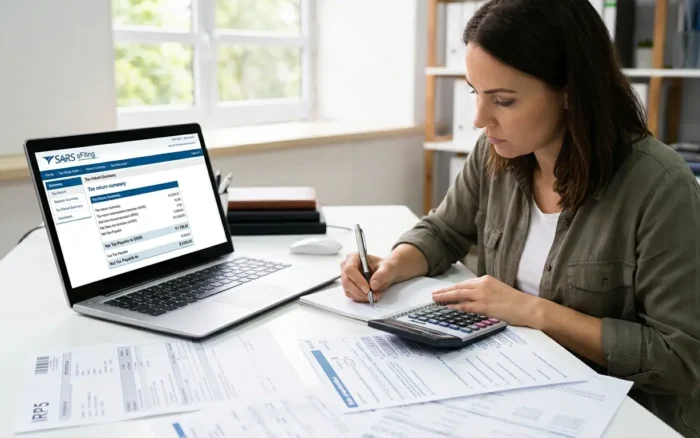
You can register or check your registration through the official tax authority website. The easiest way is via their online platform:
- Visit the SARS eFiling website: https://www.sarsefiling.co.za
- Log in or create an account
- Navigate to your tax profile and ensure provisional tax is activated
You can also find more guidance directly from SARS here:
Once registered, you will be required to submit provisional tax returns, known as IRP6 forms, for each period.
Make sure your contact details and banking information are up to date, as this will make submissions and payments much smoother.
Things To Consider as a Provisional Tax Payer
Being a provisional taxpayer comes with a few responsibilities, but with the right approach, it can be manageable.
Here are some useful tips:
- Keep accurate records: Maintain clear records of all your income and expenses. This makes estimating your taxable income much easier and reduces the risk of errors.
- Be realistic with your estimates: Avoid the temptation to underestimate your income to reduce your payments. This can lead to penalties. Rather aim for a fair and reasonable estimate.
- Set money aside regularly: Instead of scrambling for funds when payments are due, set aside a portion of your income each month for tax. This helps with cash flow and reduces stress.
- Understand allowable deductions: If you run a business or work independently, you may be able to deduct certain expenses. Knowing what qualifies can reduce your taxable income legally.
- Use digital tools: Online platforms and accounting software can simplify calculations and keep everything organised.
- Stay aware of deadlines: Missing deadlines can result in penalties and interest. Mark important dates in your calendar and plan ahead.
Conclusion to Provisional Tax
Provisional tax is a practical system designed to help taxpayers manage their income tax payments throughout the year. While it requires a bit more involvement compared to PAYE, it offers flexibility and prevents large, unexpected tax bills.
By understanding how it works, keeping accurate records, and making timely payments, you can stay compliant and avoid unnecessary stress.
If you are unsure or would prefer professional assistance, Tax Shop Outeniqua can assist you with your provisional tax returns, ensuring everything is handled correctly and efficiently.